
Critics’ Circle Theatre Awards announces nominees for the first time in 37-year history
- Alice White
- Feb 11
- 4 min read
Updated: Feb 17
The winners will be revealed next month
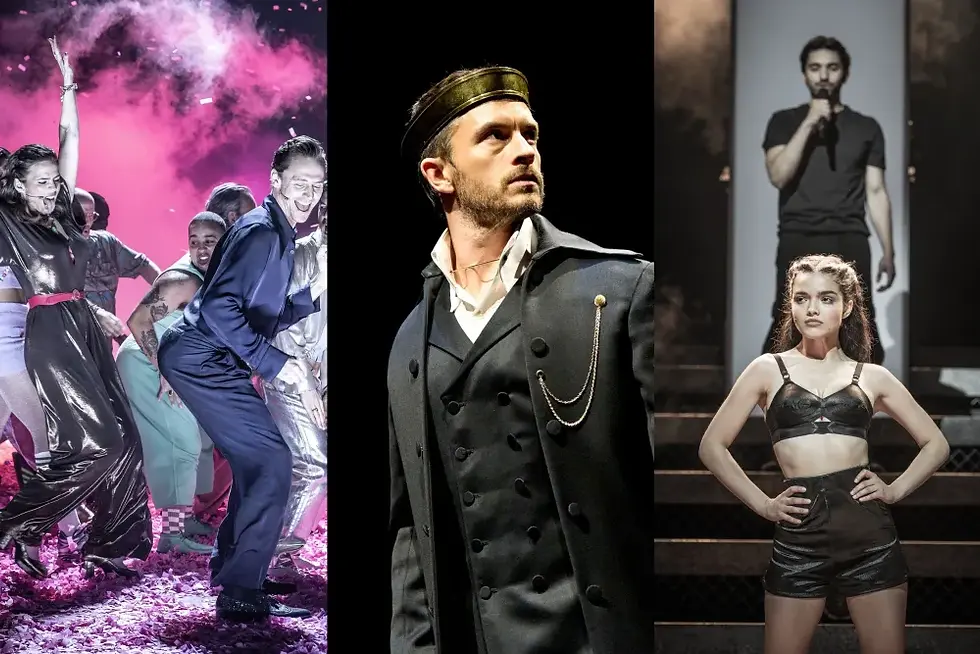
The nominees of this year’s Critics’ Circle Theatre Awards have been revealed.
Voted on by UK-based theatre critics who are members of the Circle, the awards recognise theatre work from across 2025. This is the first time in the awards’ 37-year history that the shortlist has been published and that members have voted for longlists and shortlists.
2026 chair of the Critics’ Circle Drama Section, Mark Lawson said today: “Our first experiment with longlists and shortlists was intended to increase the range of talent under consideration. I’m confident that has happened with 179 candidates in play across the whole voting process – at venues from huge to minuscule – resulting in excitingly diverse shortlists.
“Emerging talent is especially well represented with a significant number of contenders for both Most Promising Playwright and Best Newcomer recognised for their professional theatre debuts. A new category for Best Cast or Ensemble aims to reflect that, while star and lead performances matter and thrill audiences, many great shows also rely on exhilarating teamwork.”
The awards have also made the move to honour the late Blanche Marvin with a renaming of the Empty Space…Peter Brook Award, set up to celebrate a UK theatre for its programming and community efforts.
The nominees for the new Empty Space…Peter Brook Award (In Memory of Blanche Marvin), Sponsored by Nica Burns, will be announced next week.
The Critics’ Circle winners will be revealed in a ceremony at the National Theatre on 26 March.

TNominees in full:
Best New Play
David Adjmi – Stereophonic at Duke of York’s
Alice Birch – Romans: a novel at Almeida
Jack Holden and Ed Stambollouian – Kenrex at the Other Palace
James Graham (from a book by Jacob Dunne) – Punch at Young Vic / Apollo
David Ireland – The Fifth Step at @sohoplace
Suzie Miller – Inter Alia at National Theatre
Joe Murphy and Joe Robertson – Kyoto at @sohoplace
Best Revival Of A Play Or Musical
All My Sons at Wyndham’s Theatre
Brigadoon at Regent’s Park Open Air Theatre
Evita at The London Palladium
Intimate Apparel at Donmar Warehouse
Into The Woods at Bridge Theatre
Indian Ink at Hampstead Theatre
The Weir at Harold Pinter Theatre
Best New Musical
Cable Street at Southwark Playhouse
Here We Are at National Theatre
Paddington The Musical at Savoy Theatre
Shucked at Regent’s Park Open Air Theatre
Sing Street at Lyric Hammersmith
Titanique at Criterion Theatre
Best Director
Daniel Aukin – Stereophonic at Duke of York’s
Jordan Fein – Into The Woods at Bridge Theatre
Lynette Linton – Intimate Apparel at Donmar Warehouse
Jamie Lloyd – Evita at The London Palladium / Much Ado About Nothing at Theatre Royal Drury Lane
Luke Sheppard – Paddington The Musical at Savoy Theatre
Ivo Van Hove – All My Sons at Wyndham’s Theatre
Best Ensemble Or Cast
1536 at Almeida Theatre
Here We Are at National Theatre
Into The Woods at Bridge Theatre
Stereophonic at Duke of York’s Theatre
The Weir at Harold Pinter Theatre
When We Are Married at Donmar Warehouse
Most Promising Playwright
Jamie Armitage – A Ghost In Your Ear at Hampstead Theatre / An Interrogation at Hampstead Theatre
Sophia Chetin-Leuner – P*rn Play at Royal Court
Hannah Doran – The Meat Kings! (Inc) of Brooklyn Heights at Park Theatre
Sophia Griffin – After Sunday at Bush Theatre
Katherine Moar – Ragdoll at Jermyn Street Theatre
Ava Pickett – 1536 at Almeida Theatre
Shaan Sahota – The Estate at National Theatre
Best Actor
Adeel Akhtar – The Estate at National Theatre
Bryan Cranston – All My Sons at Wyndham’s Theatre
Paapa Essiedu – All My Sons at Wyndham’s Theatre
Brendan Gleeson – The Weir at Harold Pinter Theatre
Sean Hayes – Goodnight, Oscar at Barbican Theatre
James Hameed and Arti Shah – Paddington The Musical at Savoy Theatre
David Shields – Punch at Young Vic / Apollo
Best Actress
Kate Fleetwood – Into The Woods at Bridge Theatre
Julie Hesmondhalgh – Punch at Young Vic / Apollo
Marianne Jean-Baptiste – All My Sons at Wyndham’s Theatre
Rosamund Pike – Inter Alia at National Theatre
Nicola Walker – The Unbelievers at Royal Court
Samira Wiley – Intimate Apparel at Donmar Warehouse
Rachel Zegler – Evita at The London Palladium
Best Designer
Miriam Buether – Kyoto at @sohoplace / The Land Of The Living at National Theatre
Lizzie Clachan – The Lady From The Sea at Bridge Theatre
Soutra Gilmour – Much Ado About Nothing at Theatre Royal Drury Lane / Evita at The London Palladium
Tom Pye – Paddington The Musical at Savoy Theatre
Tom Scutt – Into The Woods at Bridge Theatre
David Zinn – Stereophonic at Duke of York’s / Here We Are at National Theatre
Best Shakespearean Performance
Hayley Atwell – Much Ado About Nothing at Theatre Royal Drury Lane
Jonathan Bailey – Richard II at Bridge Theatre
David Harewood – Othello at Haymarket Theatre
Tom Hiddleston – Much Ado About Nothing at Theatre Royal Drury Lane
Francesca Mills – Hamlet at National Theatre
Samuel West – Twelfth Night at Barbican
Best Newcomer
Isobel Akuwudike – The Lady From The Sea at Bridge Theatre
Ruby Ashbourne-Serkis – Indian Ink at Hampstead Theatre
Asa Butterfield – Second Best at Riverside Studios
Kate Phillips – The Weir at Harold Pinter Theatre
Diego Andres Rodriguez – Evita at The London Palladium
Jasper Talbot – Inter Alia at National Theatre
Artie Wilkinson-Hunt – The Land Of The Living at National Theatre


Comments